
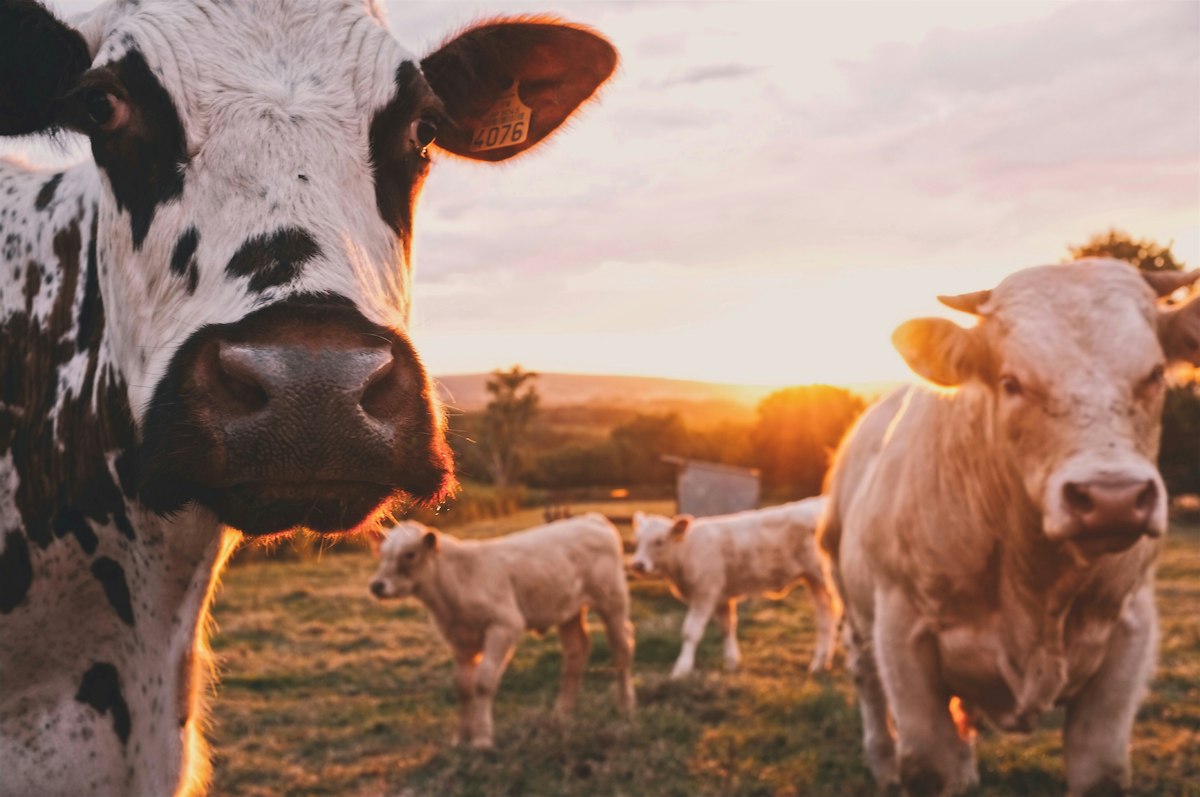
Building Relationships with Local Farmers and Growers
The Coriander That Changed Everything
It started with coriander. A restaurant owner in Somerset, frustrated by the sad, wilting bunches arriving from a wholesale supplier three days after harvest, posted on a local farming Facebook group: "Anyone growing coriander near Taunton?" Within hours, she'd connected with a smallholder six miles away who grew it in polytunnels year-round. The first delivery arrived the next morning — vibrant, fragrant, still beaded with dew. The difference on the plate was so dramatic that customers started commenting. That single connection led to relationships with a local chilli grower, a free-range poultry farm, and an allotment collective growing aubergines. Her food costs dropped, her menu got better, and she had stories to tell on social media that no amount of stock photography could match.
Why Local Sourcing Makes Business Sense
Let's set aside the warm, fuzzy feeling of supporting local agriculture for a moment and talk numbers. Local sourcing, done well, can genuinely improve your bottom line and your competitive position.
Freshness: Ingredients that travel six miles instead of six hundred arrive in better condition, last longer in your fridge, and taste noticeably better. This is particularly true for herbs (coriander, mint, curry leaves), salad leaves, and soft vegetables like tomatoes and aubergines — all staples of curry cooking that suffer disproportionately from long supply chains.
Storytelling: In an age where customers want to know where their food comes from, "our lamb is from a farm in the Cotswolds" is infinitely more compelling than "our lamb is from a wholesaler." This narrative has real commercial value — it justifies slightly higher prices, drives social media engagement, and builds the kind of brand loyalty that discounting never achieves.
Reduced food miles: Less transport means lower carbon emissions, which increasingly matters to environmentally conscious diners. It also means less packaging, less handling, and less waste. The produce supply chain article covers the logistics in more detail.
The Cost Question
A common objection is that local, small-scale produce costs more. Sometimes it does — but not always, and not as much as you might think. By buying direct from farmers, you're cutting out the wholesaler's margin (typically 20-40%). A local free-range chicken might cost £8 compared to £5 from a mainstream supplier, but if it's better quality, requires less trimming, and gives you a marketing story, the total value proposition often favours the local option.
How to Find Local Growers
Building a local supply network requires some legwork, but the resources are there if you know where to look:
- Farmers' markets: The obvious starting point. Visit your local farmers' market, talk to stallholders, and ask if they supply to restaurants. Most will be enthusiastic — restaurants provide consistent, predictable demand that complements their retail sales.
- NFU (National Farmers' Union) directory: The NFU's online directory lets you search for producers by region and product type. It's not comprehensive, but it's a useful starting point.
- Local food groups on Facebook: Surprisingly effective. Groups like "Grow Sheffield," "Sussex Produce," or "Highland Food Network" connect producers and buyers in specific regions.
- LEAF (Linking Environment and Farming): This network connects restaurants with farms that practise sustainable agriculture.
- Direct approach: If you drive past a farm that looks interesting, stop and ask. Many small farms don't actively market themselves but would welcome a restaurant customer.
Seasonal Planning: Working With Nature
Local sourcing requires a mindset shift from "I want X ingredient at any time of year" to "What's at its best right now?" This isn't a limitation — it's a creative opportunity. Seasonal menus are more interesting, more sustainable, and more profitable (because seasonal produce is cheaper when it's abundant).
For a curry restaurant, seasonal planning might look like this:
- Spring: New-season lamb, wild garlic (fantastic in saag), asparagus (surprisingly good in Indian preparations), fresh peas
- Summer: Tomatoes (at their peak for curry bases), courgettes, runner beans, fresh chillies, all the soft herbs
- Autumn: Squash and pumpkin (excellent in South Indian curries), root vegetables, mushrooms, late-season peppers
- Winter: Game (partridge and venison make stunning curries), root vegetables, stored onions, brassicas
Growing Your Own
If you have any outdoor space at all — even a small yard or a flat roof — consider growing your own herbs. Coriander, mint, and curry leaves are the three most-used herbs in Indian cooking, and all three grow readily in the UK with minimal fuss.
Coriander bolts quickly in summer but grows prolifically in spring and autumn. Successive sowings every two weeks ensure a continuous supply. Mint is virtually indestructible — plant it in a container to prevent it colonising your entire garden. Curry leaves require a greenhouse or a sunny windowsill (the plant is tropical) but a single bush produces enough leaves for a busy restaurant.
Communicating Your Sourcing Story
Growing or sourcing locally is only half the battle — you need to tell your customers about it. Effective communication channels include:
- Menu callouts: "Our chicken is from Ferndale Farm, 12 miles away" carries real weight
- Social media: Photos of farm visits, deliveries arriving, herbs growing in your garden — all compelling content
- Website: A dedicated "Our Suppliers" page shows commitment and transparency
- In-restaurant signage: A chalkboard listing today's local ingredients adds authenticity
The sustainability movement in curry restaurants is gaining momentum, and local sourcing is one of its most visible and appealing expressions. It's not about being perfect — it's about making progress, building connections, and serving food that genuinely reflects your place in the world.
Related Articles
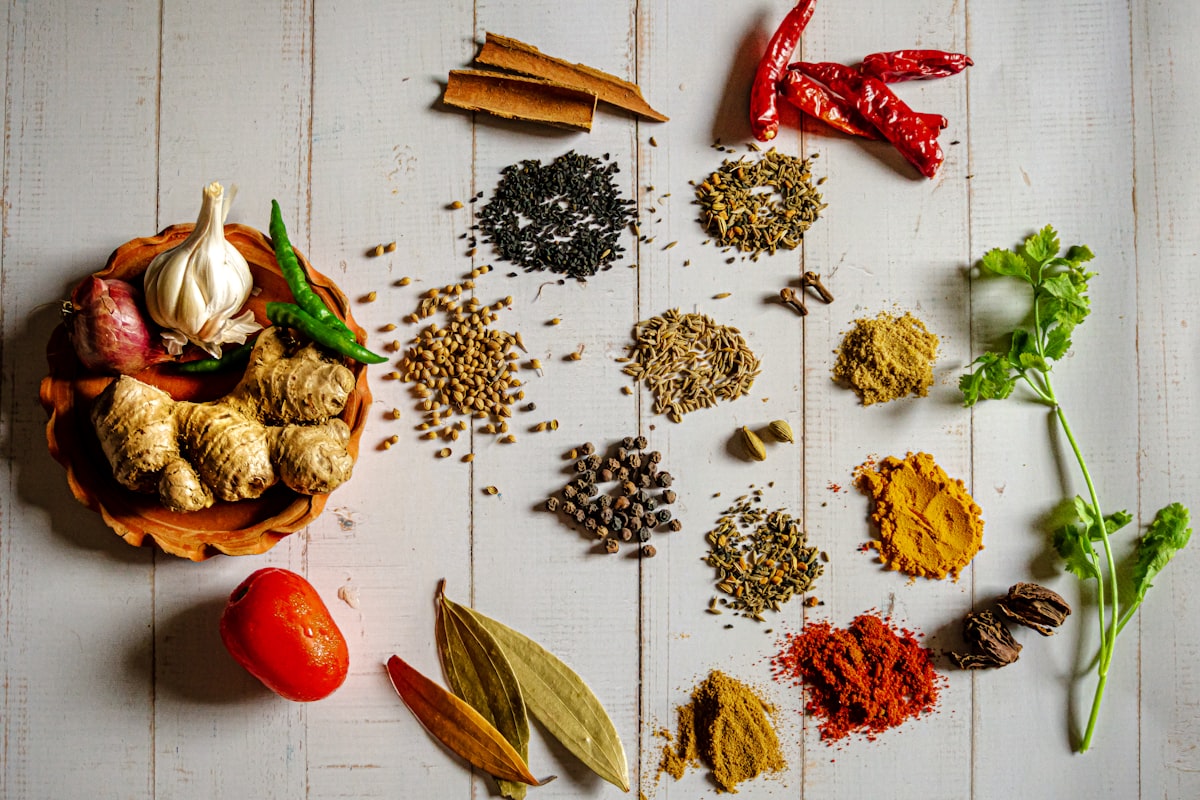
Panch Phoron: Mastering Bengal's Five-Spice Tempering
Panch phoron is the Bengali five-spice blend used whole, never ground, and crackled in hot oil to transform dals and vegetables. Here are the five seeds, the reason they stay intact, and how to nail the tempering every time.

Asafoetida (Hing): The Fermented Resin That Powers Jain Kitchens
Asafoetida, or hing, is a pungent resin that transforms in hot oil into a savoury, almost oniony depth, which is why it sits at the heart of Jain and onion-free cooking. Here is how to bloom it correctly, why it soothes dals, and how to choose pure over compounded hing.

Mustard Oil: The Pungent Soul of Bengali and Bihari Cooking
Mustard oil gives Bengali and Bihari food its unmistakable sharp, nose-tingling kick, but it needs to be heated to smoking point before use to mellow that raw bite. Here is why you smoke it, how it powers fish and pickles, and the curious 'external use only' label found on UK bottles.