
The Art of Spice Tempering Every Chef Should Know
Thirty Seconds That Transform a Dish
There is a moment in Indian cooking — a fleeting, fragrant, slightly terrifying moment — that separates a good curry from a transcendent one. It happens when whole spices hit hot oil: the mustard seeds crackle and pop, the cumin sizzles and darkens, the curry leaves sputter and release their intoxicating perfume, and the kitchen fills with an aroma so complex and alive that it makes you understand, viscerally, why Indian food is special. This is tempering — known as tadka, tarka, chaunk, or baghar depending on which part of the subcontinent you're in — and it is the single most important technique in the Indian chef's repertoire.
What Tempering Actually Does
At its core, tempering is the process of briefly frying whole spices in hot oil or ghee to release their fat-soluble flavour compounds. Many of the essential oils in spices — the molecules responsible for their distinctive aromas and flavours — are not water-soluble. They dissolve only in fat. By heating spices in oil, you extract these compounds and infuse the oil with concentrated flavour, which then distributes evenly throughout the dish.
The science is straightforward but the execution requires precision. Too cool and the spices won't release their oils. Too hot and they'll burn, turning bitter and acrid in seconds. The sweet spot — which varies by spice — is typically between 160-190°C, and the window between perfect and ruined can be as narrow as five seconds. This is why tempering is often described as the technique that reveals a chef's true skill.
Fat-Soluble vs Water-Soluble Flavour
Understanding the distinction between fat-soluble and water-soluble flavour compounds explains why tempering matters. When you add cumin seeds directly to a simmering curry (water-based), you extract only their water-soluble flavours — earthy, slightly bitter. When you temper cumin in oil first, you additionally release the fat-soluble compounds — warm, nutty, complex. The tempered version is richer, deeper, and more aromatic. Multiply this effect across four or five spices and the flavour difference is enormous.
The Common Tempering Spices
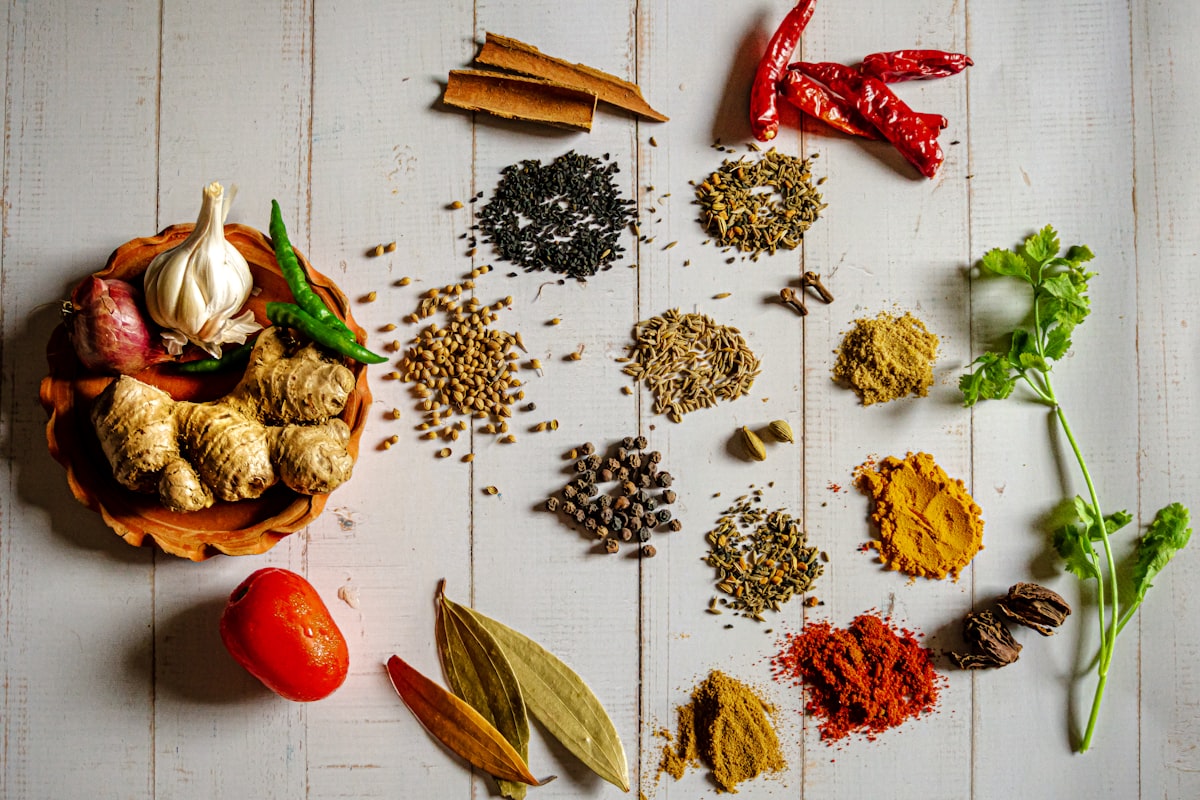
Not all spices are used in tempering — generally, whole spices work best because their intact structure allows for controlled flavour release. Here's your essential tempering toolkit:
Mustard Seeds (Rai/Sarson)
Black or brown mustard seeds are the foundation of South Indian tempering. They're added to hot oil first, where they pop and crackle within 10-15 seconds, releasing a nutty, pungent flavour. The popping is caused by moisture inside the seeds turning to steam — when they stop popping, they're done. Over-cook them and they'll taste bitter.
Cumin Seeds (Jeera)
Perhaps the most versatile tempering spice. Cumin seeds darken from sandy brown to deep amber in hot oil, releasing a warm, earthy aroma that forms the backbone of countless North Indian dishes. They should sizzle immediately on contact with the oil — if they don't, the oil isn't hot enough.
Curry Leaves (Kadi Patta)
Fresh curry leaves — not dried, which are virtually flavourless — are added to hot oil where they sputter and crisp, releasing a distinctive citrusy, herbal aroma that's irreplaceable in South Indian and Keralan cooking. Stand back when adding them — the moisture in the leaves causes vigorous spitting. The technique for Keralan fish curry relies heavily on a good curry leaf tempering.
Dried Red Chillies
Whole dried chillies (Kashmiri for colour, bird's eye for heat) are added to the oil where they darken and puff slightly, releasing smoky, fruity chilli flavour without the raw heat of chilli powder. Break them in half before adding to release more flavour — but be warned, the fumes from frying chillies can make you cough.
Asafoetida (Hing)
Just a pinch of this powerfully pungent resin, added to hot oil, transforms from something that smells frankly terrible in its raw state to a subtle, savoury, almost onion-like background flavour. It's essential in many vegetarian dals and a hallmark of Jain and Brahmin cooking traditions where onion and garlic are avoided.
Other Tempering Spices
- Fenugreek seeds: Bitter if over-fried; add just 4-5 seeds for 3-4 seconds
- Fennel seeds: Sweet and anise-like; common in Bengali and Kashmiri tempering
- Nigella seeds (kalonji): Oniony and peppery; classic in Bengali panch phoron
- Cinnamon and cloves: Used in whole form for biryani and Mughlai-style tempering
Timing: Beginning vs Finishing Tadka
Tempering happens at two different points in cooking, with very different effects:
Beginning tadka: The tempered oil forms the base of the dish. Onions, ginger, garlic, and ground spices are added after the whole spices, building the curry's foundation. This is the standard approach for most North Indian curries.
Finishing tadka: The tempered spices are poured over a finished dish — most commonly dal — as a final aromatic flourish. This is the South Indian tradition: a bowl of perfectly cooked toor dal, finished with a sizzling tadka of mustard seeds, curry leaves, dried chillies, and a pinch of asafoetida poured over the top. The contrast between the gentle, creamy dal and the explosive, fragrant tadka is one of the great pleasures of Indian cooking.
Regional Variations
Every region of India has its signature tempering combination, a kind of aromatic fingerprint that identifies the cuisine:
- Bengal: Panch phoron — equal parts cumin, nigella, fenugreek, mustard, and fennel seeds
- South India: Mustard seeds, urad dal, curry leaves, dried chillies
- Punjab: Cumin, dried chillies, asafoetida in ghee
- Gujarat: Mustard seeds, cumin, curry leaves, asafoetida, green chillies
Learning to make your own spice blends and tempering combinations is where a curry chef's individuality begins to emerge. Master the fundamentals, then develop your own signature. The tadka is where you leave your fingerprint on every dish that leaves your kitchen.
Related Articles

Amritsari Fish and the Tandoori Roots of Punjabi Restaurant Cooking
Crisp, gram-flour-battered Amritsari fish is one of Punjab's great street-side pleasures, born of dhaba culture and the same tandoor tradition that shaped the British curry house. Here is how it is made and why it matters.
Awadhi Kakori Kebab: The Silk-Smooth Skewer That Demands a Hundred Spices
The Kakori kebab of Lucknow is the most refined of all minced-meat kebabs, tenderised with raw papaya and bound with finely pounded mince and a long list of spices. Its silken texture is the legacy of Awadh's nawabi kitchens.

Goan Vindaloo, Properly: Vinegar, Garlic and the Portuguese Carne de Vinha d'Alhos
The real Goan vindaloo is a vinegar-and-garlic pork curry descended from a Portuguese dish, not a contest to see who can stand the most chilli. Here is how to reclaim it from the British curry-house heat menu.