
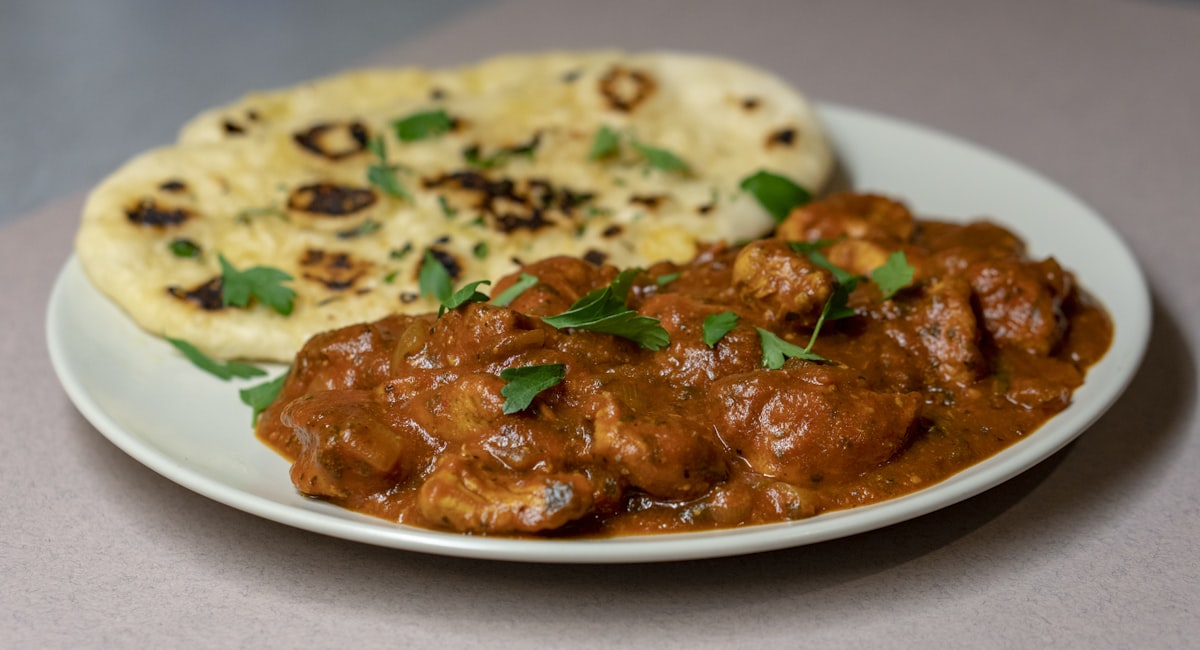
Easy Prawn Madras Recipe in Under 30 Minutes
Thirty Minutes. Seriously.
We know what you're thinking. A proper curry in half an hour? Surely the flavour needs time — hours of slow simmering, careful layering, the kind of patience that weeknight cooking simply doesn't allow. And for some curries, you'd be right. A rogan josh needs time. A biryani demands it. But a Madras? A Madras is built for speed.
The Madras style originates from South India (though the city itself is now called Chennai, the curry name has stuck in Britain). It's tomato-based, medium-hot to hot, and relies on a relatively short ingredient list punching well above its collective weight. Crucially, it doesn't need long cooking — the sauce comes together fast, the spices bloom quickly in hot oil, and prawns cook in minutes. It's the ideal weeknight curry for people who want real flavour without real effort.
What You'll Need
- 400g raw king prawns, peeled and deveined (frozen is fine — thaw them first)
- 2 tablespoons vegetable oil
- 1 medium onion, finely diced
- 3 cloves garlic, minced
- 2cm fresh ginger, grated
- 10 fresh curry leaves (dried work at a pinch, but fresh are better)
- 1 teaspoon black mustard seeds
- 2 teaspoons ground coriander
- 1 teaspoon ground cumin
- 1 teaspoon Kashmiri chilli powder
- ½ teaspoon ground turmeric
- ½ teaspoon hot chilli powder (adjust to your tolerance)
- 400g tin chopped tomatoes
- 1 tablespoon tamarind paste
- Salt to taste
- Fresh coriander to garnish
- Squeeze of lime to finish
The Method
Minutes 0–5: The Foundation. Heat the oil in a wide pan or wok over medium-high heat. When it shimmers, add the mustard seeds and curry leaves. They'll crackle and pop — that's exactly what you want. After about thirty seconds, add the diced onion. Cook for five minutes, stirring often, until it starts to soften and turn golden.
Minutes 5–8: The Spice Hit. Add the garlic and ginger, stirring for one minute. Then add all the ground spices — coriander, cumin, chilli powders, turmeric — and stir constantly for thirty seconds. The spices need direct contact with the hot oil to bloom, but they'll burn if you leave them longer than a minute. You should be hit by a wave of fragrance. If you're not sneezing slightly, you've not used enough.
Minutes 8–18: The Sauce. Pour in the tinned tomatoes and the tamarind paste. Stir well, breaking up any large pieces of tomato. Bring to a vigorous simmer and cook for ten minutes, stirring occasionally, until the sauce reduces and thickens. You want it concentrated and rich, not watery. Taste and add salt — probably about a teaspoon, but go by your palate.
Minutes 18–25: The Prawns. This is the critical stage, and the most common mistake people make is overcooking the prawns. Add them to the sauce in a single layer and cook for exactly three minutes on each side. King prawns are done when they curl into a C-shape and turn fully pink. If they've curled into a tight O, they're overdone. Remove the pan from heat immediately once they're ready.
Minutes 25–28: The Finish. Squeeze over the lime juice, scatter with fresh coriander, and give it one final stir. The lime lifts everything — that hit of acidity against the rich, hot tomato sauce is what makes a Madras sing.
Why This Works So Well
The magic of a Madras is the simplicity of its flavour architecture. You've got heat (from the chilli), sourness (from tomato and tamarind), aromatic depth (from the curry leaves, mustard seeds, and ground spices), and richness (from the oil and the natural sweetness of cooked onion). Each element is distinct, and they work together without any of them dominating.
Prawns are the ideal protein for this style of cooking because they're naturally sweet, which balances the sauce's acidity and heat. They also cook in minutes, which keeps the total time genuinely under half an hour.
Variations Worth Trying
- Fish Madras: Substitute the prawns with firm white fish — cod, pollock, or monkfish — cut into chunks. Add two minutes to the cooking time.
- Egg Madras: Hard-boil four eggs, halve them, and add them to the finished sauce. A classic budget-friendly option.
- Vegetable Madras: Use chickpeas and cauliflower instead of prawns. Add the cauliflower with the tomatoes and the chickpeas five minutes later.
What to Serve Alongside
Plain basmati rice is the traditional accompaniment — the simplicity of the rice lets the sauce do the talking. A cooling cucumber raita on the side helps temper the heat. If you're making this for friends, pair it with a contrasting milder dish (a korma or a dal) so everyone can balance their plate.
For another quick seafood curry, try our Keralan fish curry with coconut milk — a completely different flavour profile but equally fast. And if you want to take your spice game up a notch, our guide to making your own garam masala will transform every curry you cook from here on.
A good Madras should make you reach for your water glass, then immediately reach for another forkful instead. It should be hot, sour, fragrant, and utterly compelling. This recipe delivers all of that in thirty minutes flat. No excuses for a sad sandwich tonight.
Related Articles
Shorshe Ilish: The Bengali Art of Hilsa in Mustard Gravy
Shorshe ilish marries the oily, intensely flavoured hilsa fish with a sharp mustard gravy in a dish that sits at the very heart of Bengali identity. Here is how it is built, why the bones matter, and how to tame the bitterness of the mustard.
Kosha Mangsho: How Bengalis Slow-Cook Mutton to Mahogany
Kosha mangsho is Bengal's deep, dark, celebratory mutton curry, coaxed to a mahogany sheen through slow reduction rather than added colour. This is the bhuna-style technique behind the wedding-and-festival classic, and how to serve it with luchi.

Chingri Malai Curry: Bengal's Prawn and Coconut Showpiece
Chingri malai curry pairs plump prawns with a silky, gently spiced coconut gravy in one of Bengal's grandest dishes. We trace its possible Malay roots, explain how to pick the right prawns, and share the technique that keeps the coconut milk from splitting.