
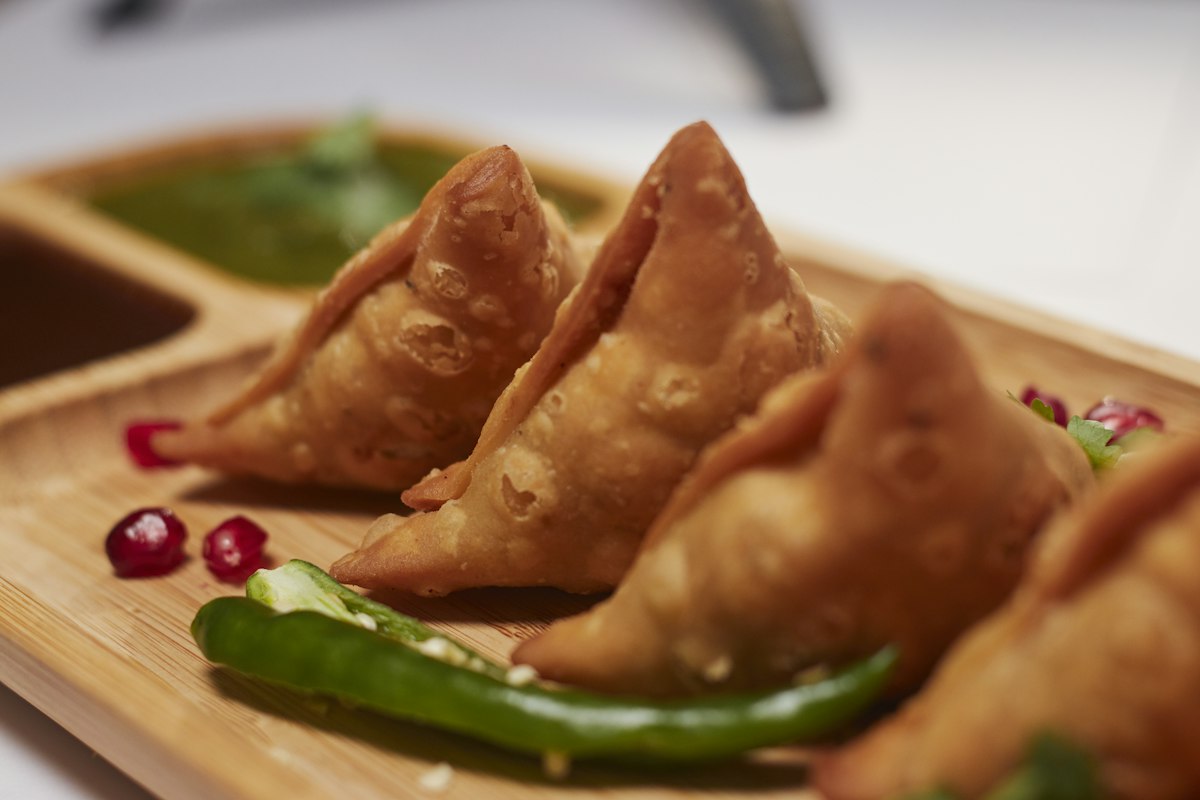
Homemade Samosa Recipe with Crispy Pastry Tips
The Pastry Is Everything
Everyone has an opinion about samosa filling. Peas or no peas. Whole cumin or ground. Green chilli or dried. These are valid debates, and we'll get to them. But here's the truth that most recipes skip over: the filling is the easy part. The pastry is where samosas are won or lost.
A great samosa pastry should shatter when you bite into it — not bend, not crumble, not stick to your teeth like a bad spring roll wrapper. It should be golden, flaky, and layered, with visible striations when you break it open. Achieving this requires a specific technique that's less about ingredients (it's literally flour, oil, water, and salt) and more about how you bring them together. Master this, and you'll produce samosas that rival any street vendor in Delhi.
The Pastry
Ingredients
- 300g plain flour
- 3 tablespoons vegetable oil (plus more for frying)
- ½ teaspoon salt
- ½ teaspoon ajwain (carom) seeds — optional but wonderful
- 120–130ml warm water
The Technique That Makes It Crispy
Sift the flour into a large bowl. Add the salt and ajwain seeds and mix. Now here's the crucial step: add the oil and rub it into the flour with your fingertips, exactly as you would when making shortcrust pastry. Keep rubbing until the mixture resembles coarse breadcrumbs. This oil-coating of the flour particles is what creates the flaky layers in the finished samosa. Skip this step and you'll get a tough, bready wrapper.
Add the warm water gradually — a tablespoon at a time — mixing with your other hand until a firm dough forms. You may not need all the water. The dough should be stiff, not soft. Knead for five minutes on a lightly floured surface until smooth and elastic. Wrap in cling film and rest for thirty minutes at room temperature. This resting period relaxes the gluten, making the dough easier to roll and the finished pastry more tender.
The Filling
Ingredients
- 500g waxy potatoes (Maris Piper or Charlotte), peeled and cut into 1cm cubes
- 100g frozen peas
- 2 tablespoons vegetable oil
- 1 teaspoon cumin seeds
- 1 teaspoon coriander seeds, lightly crushed
- 2 green chillies, finely chopped
- 2cm fresh ginger, finely grated
- 1 teaspoon amchur (dried mango powder) — the secret weapon
- ½ teaspoon garam masala
- ½ teaspoon ground turmeric
- Salt to taste
- Small handful fresh coriander, chopped
Making the Filling
Boil the potato cubes in salted water until just tender — about eight minutes. Drain thoroughly. This is important: wet potatoes make soggy samosas. Spread them on a clean tea towel and pat dry.
Heat the oil in a pan over medium heat. Add the cumin seeds and crushed coriander seeds, letting them crackle for thirty seconds. Add the green chillies and ginger, stirring for a minute. Add the cooked potatoes, frozen peas, turmeric, amchur, and garam masala. Stir gently — you want the potatoes to hold their shape, not turn to mash. Cook for three minutes, season with salt, remove from heat, and stir in the fresh coriander. Allow to cool completely before filling.
A note on amchur: this dried mango powder adds a tangy sourness that lifts the filling from good to irresistible. You can find it in any Asian grocery, and it costs about £1.50 for a packet that lasts months. Don't substitute lemon juice — the effect is different.
Assembly and Folding
Divide the rested dough into eight equal balls. Roll each ball into an oval about 18cm long and 10cm wide. Cut each oval in half to create two semi-circles. Each semi-circle becomes one samosa.
Take a semi-circle, wet the straight edge with a dab of water, and fold one corner over to the other, creating a cone shape. Press the seam firmly to seal. Hold the cone upright and fill with about two tablespoons of the cooled potato mixture. Don't overfill — you need room to seal the top. Wet the open edges and press together firmly, crimping with a fork if you like. The seal must be tight, or the samosas will burst during frying.
Frying
This is where most home cooks go wrong, and the fix is simple: temperature control.
Fill a deep pan or kadai with oil to a depth of at least 8cm. Heat to 160°C — not higher. The temptation is to crank the heat for faster cooking, but lower temperature is the key to crispy, layered pastry. At 160°C, the samosa cooks slowly enough for the pastry layers to puff and separate before the exterior darkens. At 180°C or above, the outside browns before the inside is cooked, giving you a dark shell around a doughy centre.
Fry three or four samosas at a time (don't crowd the pan) for seven to eight minutes, turning occasionally, until deep golden brown all over. Drain on kitchen paper. Allow to rest for two minutes before eating — the filling is volcanic straight from the fryer.
Serving Suggestions
Samosas are brilliant on their own, but a trio of chutneys takes them from snack to event:
- Tamarind chutney: Sweet, sour, and sticky. The classic pairing.
- Green chutney: Fresh coriander, mint, green chilli, and lemon juice blitzed smooth. Bright and punchy.
- Yoghurt raita: Cool, creamy, and calming — essential if you've gone heavy on the chillies in the filling.
For more Indian snack recipes, dive into our street food chaat recipes. And if you want to explore tandoori cooking alongside your frying skills, our guide to tandoori cooking at home covers everything from marinades to makeshift clay oven alternatives.
A perfectly made samosa is one of the world's great snacks — portable, satisfying, endlessly adaptable, and absurdly delicious. Once you've cracked the pastry technique, you'll never buy frozen ones again. We promise.
Related Articles
Shorshe Ilish: The Bengali Art of Hilsa in Mustard Gravy
Shorshe ilish marries the oily, intensely flavoured hilsa fish with a sharp mustard gravy in a dish that sits at the very heart of Bengali identity. Here is how it is built, why the bones matter, and how to tame the bitterness of the mustard.
Kosha Mangsho: How Bengalis Slow-Cook Mutton to Mahogany
Kosha mangsho is Bengal's deep, dark, celebratory mutton curry, coaxed to a mahogany sheen through slow reduction rather than added colour. This is the bhuna-style technique behind the wedding-and-festival classic, and how to serve it with luchi.
Chingri Malai Curry: Bengal's Prawn and Coconut Showpiece
Chingri malai curry pairs plump prawns with a silky, gently spiced coconut gravy in one of Bengal's grandest dishes. We trace its possible Malay roots, explain how to pick the right prawns, and share the technique that keeps the coconut milk from splitting.