
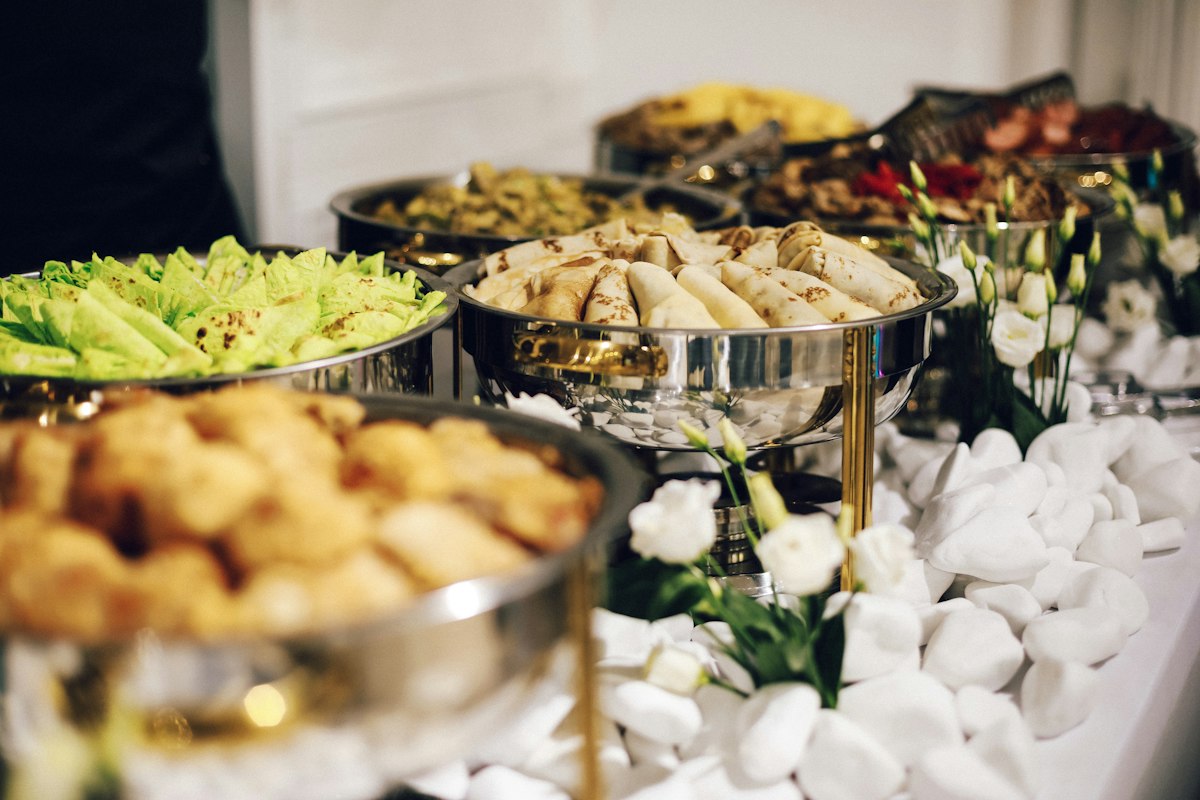
Temperature Control for Curry Buffet Services
Buffets: Where Profit and Peril Share the Same Table
A well-run curry buffet is a thing of beauty — gleaming bain-maries lined with colourful dishes, the fragrance of a dozen different spices mingling in the air, customers loading plates with abandon. It's also one of the most financially attractive service models: lower staffing costs, efficient batch cooking, and average spends that can exceed à la carte. But here's the uncomfortable truth that every buffet operator needs tattooed on the inside of their eyelids: buffets sit squarely in the food safety danger zone, and the margin for error is razor thin.
When food leaves the controlled environment of the kitchen and sits in a public service area, you're handing temperature control over to physics. And physics doesn't care about your profit margins. The "danger zone" — between 8°C and 63°C — is where pathogenic bacteria multiply most rapidly, potentially doubling every twenty minutes. A chicken curry that drops below 63°C at noon could contain dangerous levels of bacteria by 1pm. This guide will ensure your buffet stays safe, legal, and profitable.
Hot Holding: The 63°C Rule
UK food safety law requires that hot food displayed for service must be held at or above 63°C. This isn't a target — it's a minimum. In practice, aim for 70-75°C in your bain-maries and chafers, giving yourself a comfortable buffer above the legal threshold.
Equipment matters enormously here. Invest in commercial-grade bain-maries rather than domestic warmers. Ensure they're properly calibrated — fill the water bath to the correct level (too little water means hot spots and cold spots), and preheat them to operating temperature before loading food. Chafers with gel fuel cans are fine for short events but struggle to maintain temperature over longer buffet services. For permanent buffet operations, mains-powered bain-maries are far more reliable.
Monitoring with Probes
You cannot judge food temperature by looking at it. A curry that's steaming vigorously might still have cold spots, particularly in thicker dishes or large vessels. Use a calibrated digital probe thermometer to check the core temperature of every dish at least every hour during service. Record these checks in your food safety log — date, time, dish, temperature, and the initials of the person who checked.
Probe between different dishes too. A dal sits differently in a bain-marie well than a meat curry. Rice is notoriously tricky — it can form a crust on top that insulates the interior. Stir gently before probing to get an accurate reading from the centre of the dish.
The Two-Hour Rule
Even at correct temperatures, food quality deteriorates the longer it sits on a buffet. As a general best-practice guideline, no dish should remain on the buffet for longer than two hours. After two hours, discard the remaining food and replace with a freshly prepared batch. Yes, this feels wasteful. No, there's no safe shortcut.
Plan your batch sizes to match demand. It's far better to put out smaller quantities and replenish frequently than to fill enormous vessels and watch food sit for hours. This approach also means customers see fresh, appetising food rather than dried-out dishes that have been sitting under heat lamps all afternoon.
The Golden Rule: Never Top Up
This is one of the most commonly broken rules in buffet service, and one of the most dangerous. Never add fresh food on top of food that's already been on the buffet. When you add hot, freshly cooked chicken curry to a half-empty tray that's been sitting for ninety minutes, you create a layered nightmare of different temperatures and different bacterial loads. The fresh food cools down, the old food doesn't warm up, and the entire batch becomes unsafe.
Instead, replace the entire container. Remove the old tray, put out a clean tray with fresh food, and either discard the remaining old food or — if it's been less than two hours and the temperature is still above 63°C — keep it for immediate service elsewhere (staff meals, for instance).
Cold Items and the 8°C Threshold
Cold items on a buffet — raita, salads, cold chutneys, desserts — must be maintained below 8°C. Display them on ice beds, in chilled display units, or use frozen gel packs beneath serving dishes. The same monitoring regime applies: probe temperatures hourly and record them.
Dairy-based items like raita and yoghurt-based chutneys are particularly vulnerable to temperature abuse. On a warm day, a bowl of raita without adequate chilling can exceed 8°C within thirty minutes. Keep backup portions in the fridge and rotate them onto the buffet frequently.
Sneeze Guards and Customer Hygiene
Food hygiene regulations require that buffet food is protected from contamination by customers. Sneeze guards (clear screens positioned above the buffet line) are the standard solution. Ensure they extend far enough to cover all dishes and are positioned at the correct height. Provide long-handled serving utensils for each dish — customers shouldn't need to reach over other dishes to serve themselves.
Position hand sanitiser at the start of the buffet line. While you can't control whether customers use it, making it available demonstrates due diligence and encourages good practice.
End of Service: What Gets Kept and What Goes
At the end of buffet service, any food that has been on display must be discarded. It cannot be chilled down and reused the next day. It cannot be reheated and served again. It's gone. This is non-negotiable under food safety law, and it's the biggest cost centre of buffet operations. Plan portion sizes carefully to minimise waste whilst still offering a generous spread.
For comprehensive safe storage practices, explore our guide to safe food storage for curry ingredients. And if you're running buffets for events and functions, our article on catering for large events covers the logistics from start to finish.
Related Articles
How to Source Halal Meat for Your Restaurant
Halal certification matters to a huge portion of your customer base. Here's how to source it properly and maintain trust.
Gluten-Free Curry Options: Safety and Menu Guide
Many curries are naturally gluten-free, but cross-contamination lurks in unexpected places. A guide for restaurants and diners.
Food Safety for Street Food and Market Traders
Selling curry at markets and festivals? The food safety rules still apply — and they're slightly different from a fixed restaurant.